TL;DR:
A SharePoint migration is not automatically a fresh start. If existing problems are not addressed before migration, they simply move into a new environment. This blog explains how to identify hidden SharePoint technical debt, including outdated content, permissions, metadata issues, and information architecture problems, before they become long-term migration challenges.
Migration might feel like a reset. New environment, clean slate, fresh start. That is the assumption most companies bring into a SharePoint migration, and it is the assumption that causes the most expensive post-migration problems.
Companies that have run SharePoint for 10 to 15 years typically accumulate 40 to 60% of content that is stale, duplicated, or no longer relevant. Migrating that content doesn’t clean it up. It moves it into a new environment where it bloats storage, pollutes search results, and makes governance harder than it was before. EPC Group And with Microsoft Copilot now surfacing content based on existing permissions, technical debt that previously sat in the background now has reach across every user’s prompt window.
This is the hidden cost of lift-and-shift migration. This blog walks through the most common types of SharePoint technical debt, how to identify them before migration begins, and the steps companies can take to reduce them before they become tomorrow’s problem.
What Is SharePoint Technical Debt?
SharePoint technical debt is the collection of outdated decisions, unused content, inconsistent structures, and unmanaged configurations that build up over time.
It develops through years of normal business activity:
- Teams create new sites for projects.
- Employees leave, but their content remains.
- Permissions are added for temporary needs and never reviewed.
- Different departments create their own structures and naming conventions.
Eventually, the SharePoint environment still works but it becomes harder to manage and search.
And a migration is often the first time companies truly see the scale of these issues.
1. Outdated and Duplicate Content
One of the biggest mistakes companies make is assuming that everything should be migrated.
Not every document still provides the same business value.
Years of collaboration often leave behind:
- Old project documentation
- Duplicate files
- Unused SharePoint sites
- Outdated versions of documents
- Content with no clear owner
Moving all of it into the new environment increases complexity and makes it harder for users to find trusted information.
Before migration begins, companies should identify what should be migrated, archived, or removed.
2. Permission Complexity Can Follow You
Permissions are one of the most sensitive parts of a SharePoint migration.
A company may have thousands of permission decisions created over the years:
- Individual user permissions
- Broken inheritance
- Old security groups
- External access that is no longer required
Moving these permissions without review can recreate the same security challenges in the new environment.
A migration is an opportunity to review:
- Who should have access?
- Which groups are still active?
- Which permissions should be simplified?
3. Metadata and Information Architecture Problems
Files are only part of the story.
Metadata determines how easily users can search, filter, and manage information after migration.
Many SharePoint environments develop inconsistent metadata over time:
- Different naming conventions
- Duplicate fields
- Missing values
- Different structures between departments
Before migration, companies should decide:
- Which metadata should be preserved?
- Which fields should be updated?
- How should content be organized moving forward?
4. Migration Success Is Not Only Moving Files
A migration report showing completed transfers does not always tell the full story.
A successful migration should answer:
- Can users find the content they need?
- Are permissions working correctly?
- Is important metadata preserved?
- Did the expected content migrate successfully?
This is why validation is an important part of enterprise migration projects.
How Tzunami Helps Companies Reduce Migration Risk
Technical debt becomes expensive when companies discover it after migration.
Tzunami helps companies identify and manage migration complexity through:
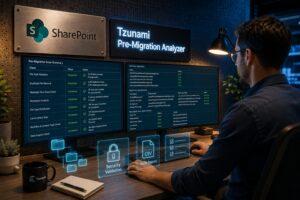
- Pre-Migration Analyzer helps companies understand the source environment before migration.
- Metadata Migration to preserve important business information.
- Permission Migration to maintain security during migration.
- Post-Migration Verification to validate migration results.
The goal is to help companies move to a cleaner, more manageable environment with fewer surprises after migration.
Conclusion
A SharePoint migration does not automatically fix years of accumulated problems.
If outdated content, unclear permissions, inconsistent metadata, and poor structures are ignored, they will become tomorrow’s SharePoint problems.
The best migrations start before the first file moves.
By identifying technical debt early, making informed decisions, and validating the results, companies can turn migration into an opportunity to improve their environment.
Frequently Asked Questions
1. What is SharePoint technical debt?
SharePoint technical debt is the accumulation of outdated content, complex permissions, inconsistent metadata, and unmanaged structures that make an environment harder to maintain.
2. Does SharePoint migration remove technical debt?
No. Migration moves content and configurations. Existing problems need to be identified and addressed before migration.
3. What are common SharePoint migration issues?
Common issues include duplicate content, permission complexity, metadata inconsistencies, and poor information architecture.
4. Why should companies analyze SharePoint before migration?
Analysis helps identify unnecessary content, migration risks, and areas that need attention before moving to the new environment.
5. How does Tzunami help with SharePoint migration?
Tzunami helps companies analyze, migrate, and validate enterprise content while supporting metadata migration, permission migration, and post-migration verification.